
The Risk of Building Too Little: The Exploding Demand for AI Compute
I think I made a typically German error in judgment in early 2025.
I looked at the billions being spent on AI data centers and thought: “That’s a pretty massive risk.”
Today, I would rather say: The risk probably wasn’t building too much. The risk is building too little.
Why? Because the use of AI is fundamentally changing right now.
A year ago, for many, that meant a few prompts in a chat window. Maybe a document now and then, perhaps a few tens of thousands of tokens.
Today, we’re talking about agent harnesses, long contexts, tool usage, iterative loops, and real workflows (especially in coding). Millions of tokens are being burned because the productivity gain is real.
Added to that: Not only are the models getting better, but they’re also getting hungrier. More compute in training. More compute in inference. More demand because capable models can suddenly take over real work. This dynamic is enormous.
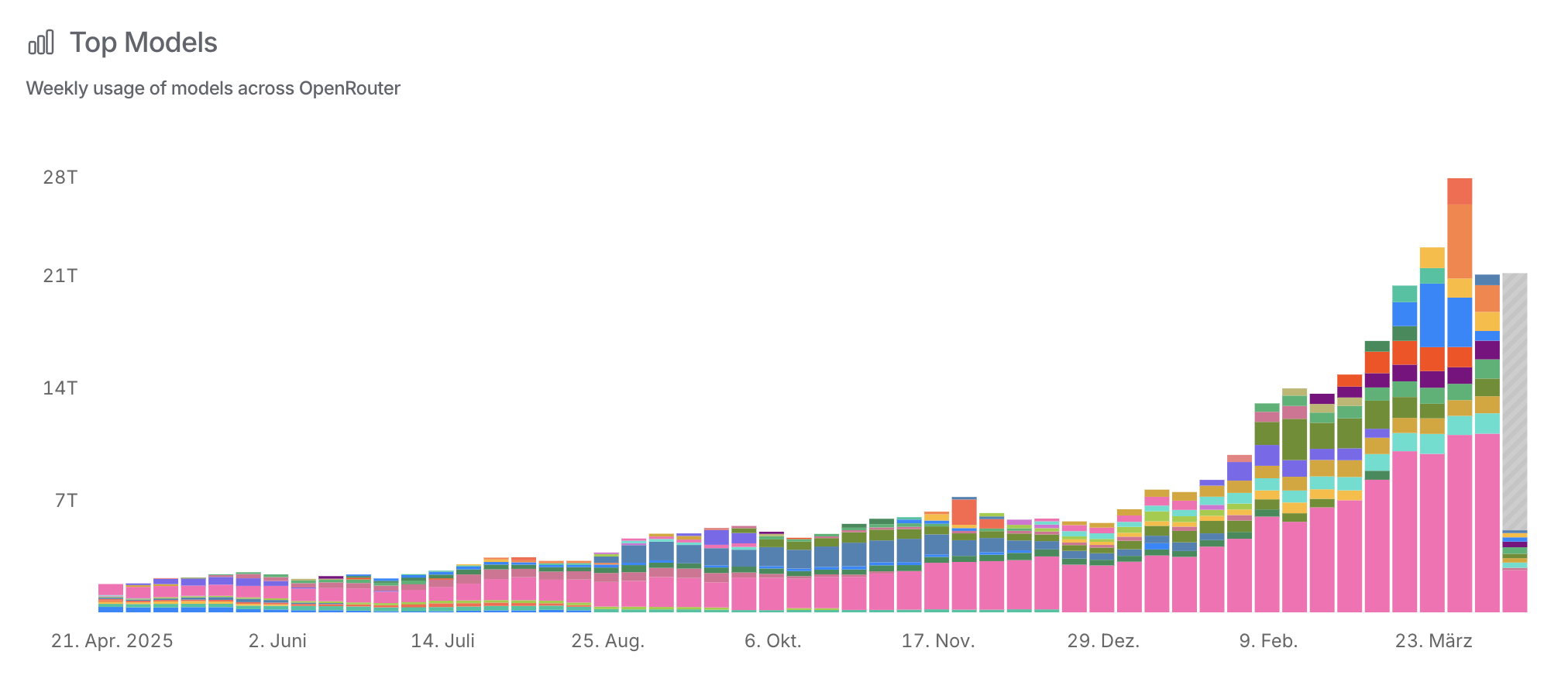
The “At Capacity” messages that users recently received from Anthropic or Google show what this means in practice when a provider hasn’t secured enough compute. Or when subscription token budgets are drastically throttled. And that’s despite the fact that only one of the first major use cases has basically just been partially tapped by early adopters: Software development.
If capacity is already getting tight now, even though the broad mass of knowledge workers and the “late majority” haven’t fully jumped on board yet. Then it’s pretty clear where this journey is heading.
Therefore, I would formulate the hypothesis much more strongly now:
Whoever has capital, energy access, data center know-how, and distribution access should probably build everything they possibly can. Because the demand will grow faster than the supply for the foreseeable future.
And perhaps that explains exactly why Anthropic’s models aren’t simply rolled out broadly right away. Not just because of safety, but perhaps also because the infrastructure might not even be there yet to properly carry the demand.
My impression today: We are still underestimating the demand dynamic and how much infrastructure the “real” AI agents that are currently emerging will devour.