The More AI-Literate We Become, the More We Notice AI Slop
The more AI literacy rises inside companies, the stronger the aversion to AI content becomes. More precisely: the stronger the aversion to AI slop becomes.
You receive an email from a colleague and after two sentences you can already tell: this is standard Copilot output. Or you receive a concept deck with twenty GPT-Image-2-style infographic slides full of boxes, arrows, and text, and you think: he really believes a prompt automatically turns into a good concept.
You see the same thing on social media. The first paragraphs are already full of AI signals: “not X, but Y” constructions, em dashes, perfectly symmetrical paragraphs. In emails, it often shows up through formatting: different fonts, excessive bolding, or emojis that do not fit the person.
In my last article, I wrote that I am trying to reduce my AI use so my thinking muscle does not continue to atrophy.
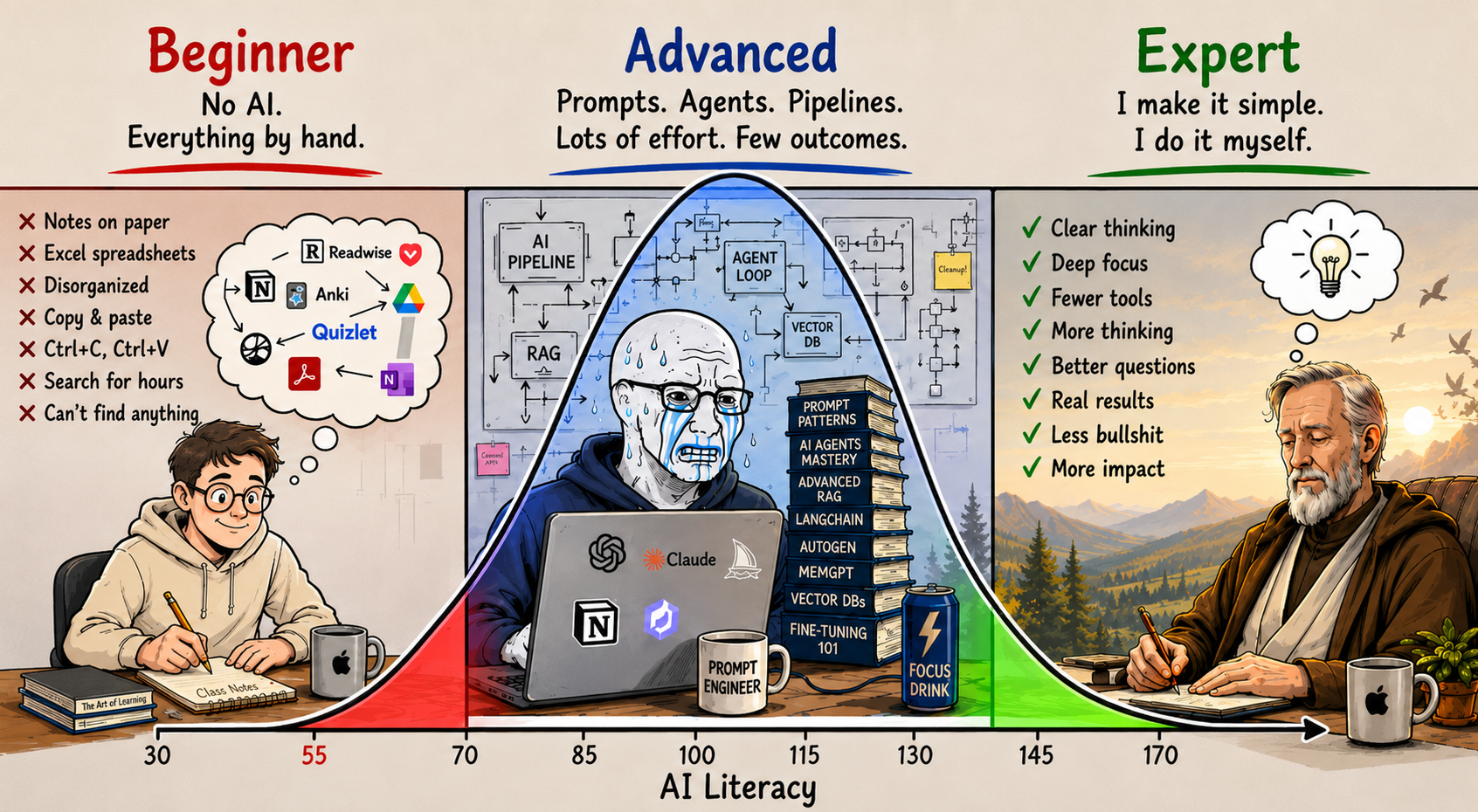
For everyone who does not want to completely rebuild their AI approach, here are a few simple rules.
Use AI Slides as Inspiration, Not as the Final Product
Let AI help you with the storyline, core messages, and structure. Then build the slides yourself.
And reduce the content ruthlessly. Almost nobody can process more than five crisp messages on a single slide anyway. Do not turn something into a complex infographic just because the model is able to generate one.
Pro tip: Let ChatGPT generate the slide as an image, then use Claude to turn that image into a PowerPoint slide.
Do Not Use AI Text for Every Tiny Thing
Between colleagues, a message with two spelling mistakes is often better than a perfectly optimized text that no longer sounds like you.
Short emails, questions, and internal updates can usually be written by yourself.
Remove the AI Formatting
Before sharing AI outputs, normalize the formatting. Unify fonts, remove unnecessary bolding, and check spacing. Anything that looks like copy and paste from ChatGPT immediately makes the content suspicious.
Break the Typical AI Patterns
Ask yourself: would I really have written it like this? Would a colleague recognize that the text came from me? If not, it is not finished yet.
Replace em dashes with normal punctuation. In “not X, but Y” constructions, you can often just delete the X. Simplify paragraphs that sound like TED Talk theses.
Give AI High-Quality Context
If the prompt was written in five seconds, you probably should not share the result, because there will be very little of your own IP in it.
Add context: meeting transcripts, your own slides, documents, notes, or voice memos. The selection and preparation of that material is your contribution to the AI result.
AI can turn that material into something useful. But it cannot replace the fact that someone had to think first.
In the end, this is the difference between AI as a tool and AI slop: you can tell whether a human actually wanted to say something.